
Voltage drop is one of those electrical issues that seems minor until it starts causing real trouble on site. A circuit may look fine on paper, the breaker may be correctly selected, and the equipment may even be rated properly. But when the cable run is long, the voltage reaching the load can fall enough to create poor performance, nuisance tripping, overheating, weak motor starting, or dim lighting. In the field, these are not small issues. They affect reliability, efficiency, and sometimes safety.
As an engineer, I have seen this problem show up in residential buildings, workshops, farms, pumping systems, outdoor distribution circuits, site offices, and remote mechanical equipment. In many cases, the equipment itself was not the true problem. The real issue was the cable run. More specifically, it was excessive voltage drop caused by distance, load current, poor terminations, or a design that did not properly account for field conditions.
If you want to know how to reduce voltage drop in long cable runs, the good news is that there are proven practical fixes. Some are straightforward, such as increasing cable size. Others involve better routing, improving terminations, or changing the way power is distributed. The best solution depends on the installation, but the principles are always the same.
This article explains what causes voltage drop, why long cable runs make it worse, how to recognize it in the field, and what practical methods actually solve the problem.
What is voltage drop and why does it matter?
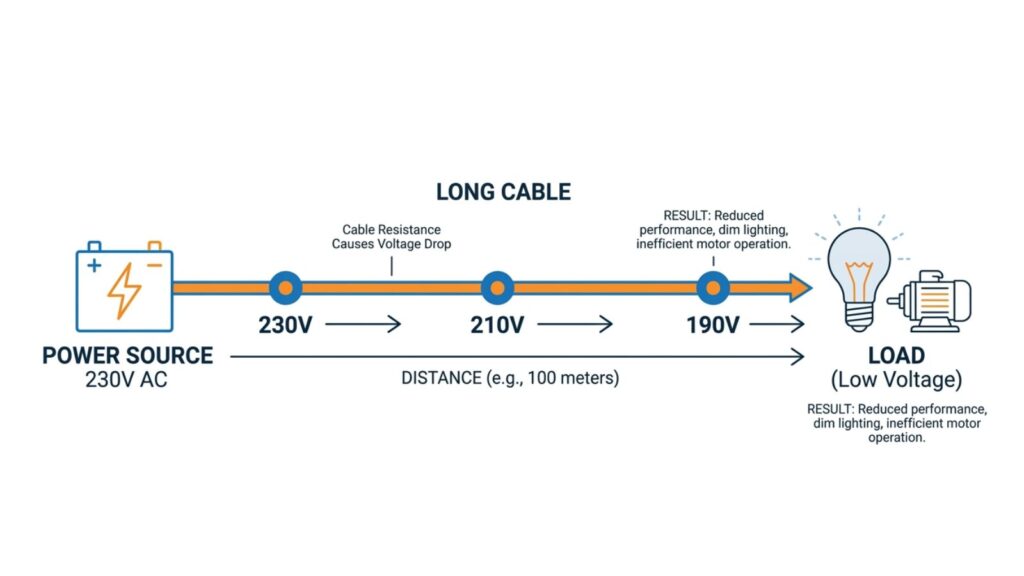
Voltage drop is the reduction in voltage that occurs as current travels through a conductor. Every cable has resistance. When current flows through that resistance, part of the supply voltage is lost before it reaches the load. The longer the cable and the higher the current, the greater the voltage drop.
In short runs, the drop may be small enough to ignore. In long cable runs, especially when the load is heavy, it becomes a serious design and troubleshooting issue. A load that should receive 230 V or 400 V may receive significantly less under operating conditions. That lower voltage can affect how the equipment performs.
This matters because electrical equipment is designed to operate within a certain voltage range. If the voltage at the load falls too much, motors may struggle to start, heaters may produce less output, lights may dim, and electronic devices may behave unpredictably. The system may still be energized, but it is no longer operating the way it was intended.
From a professional design perspective, voltage drop also matters because electrical standards usually limit how much drop is acceptable in a circuit. That means it is not only a performance issue. It is also a compliance issue.
Why long cable runs increase voltage drop
The reason is simple. The longer the cable, the greater the total resistance in the path. Resistance increases with conductor length and decreases with conductor size. That is why a short run and a long run carrying the same current do not behave the same way.
If a cable is supplying a load over a long distance, the conductor resistance adds up. When current flows, more voltage is lost along the cable. If the cable is undersized, the effect becomes even worse. This is why long cable runs feeding pumps, motors, outbuildings, EV chargers, air conditioners, and remote panels often need special attention during design.
In practical terms, long distance and heavy current are a bad combination for voltage drop. If both are present, you must check the circuit carefully rather than assuming the normal cable size will be fine.
Common field symptoms of excessive voltage drop
One of the first signs is poor equipment performance at the far end of the circuit. Lighting circuits may show dim lights, especially when another load starts. Motors may start slowly or fail to develop enough torque. Contactors may chatter. Pumps may struggle under load. Drives and electronic equipment may show undervoltage alarms or reset unexpectedly.
Another common symptom is that the problem becomes worse only when the equipment is loaded. That is an important clue. At no load, the voltage may appear normal. Under full load, the voltage falls because current rises and the cable losses become more noticeable.
This is why voltage measurements should always be taken under realistic operating conditions. A circuit can look acceptable during a quick inspection and still perform poorly during actual service.
Start with proper troubleshooting before changing anything
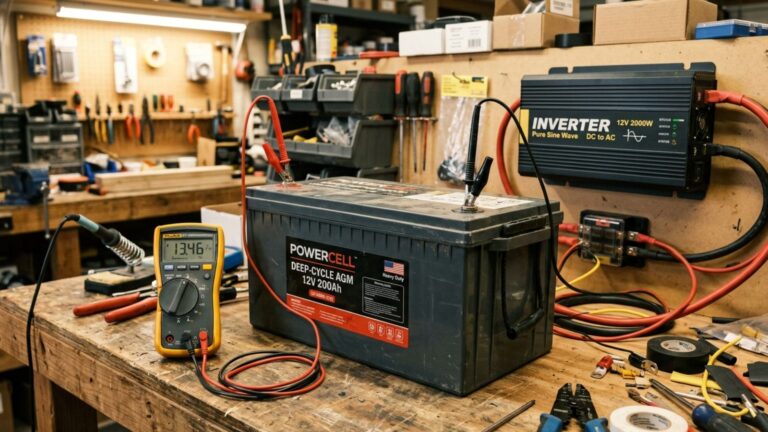
Before deciding on a fix, verify where the problem is happening. Measure the voltage at the source and then at the load while the equipment is running. If the source voltage is healthy but the load-end voltage is significantly lower, the drop is likely occurring in the cable run or connections.
This step is essential because not every low-voltage complaint comes from the final circuit. Sometimes the supply voltage is already low upstream. Sometimes the real problem is a loose termination, a damaged connector, an overloaded feeder, or a poor utility supply. Replacing a cable without checking the full picture can waste time and money.
A good engineer does not guess. A good engineer measures first.
Increase cable size to reduce voltage drop
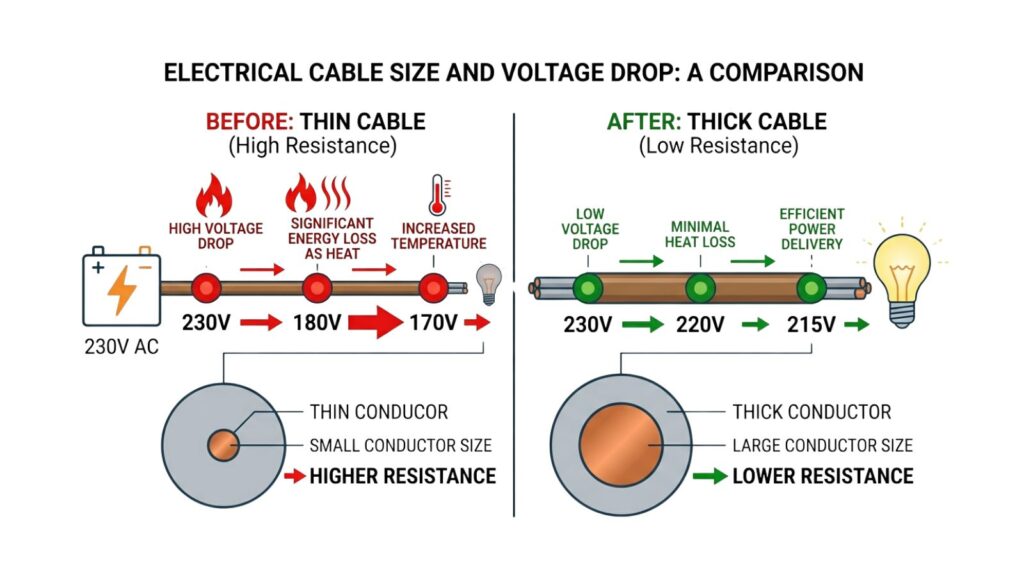
If you ask electricians and engineers for the most common answer to how to reduce voltage drop in long cable runs, the first answer is usually to increase the conductor size. That is because a larger conductor has lower resistance. Lower resistance means lower voltage drop for the same length and current.
This is often the most direct and most effective fix in the field. A cable may be thermally adequate, meaning it can carry the current without overheating, but still be too small from a voltage drop point of view. That happens often in long runs where the cable was selected only on ampacity and not on voltage performance.
For example, a long circuit feeding a remote subpanel or pump may work electrically, but the far-end voltage may still be too low. Upsizing the cable reduces resistance and improves voltage at the load. It also reduces power loss in the cable, which improves efficiency.
This is why cable sizing should never be based only on current rating. Voltage drop must be part of the design decision.
Shorten the route wherever possible
One of the most practical ways to reduce voltage drop in long cable runs is to reduce the actual run length. This sounds obvious, but it is often missed in real installations. The cable route may take unnecessary detours around site obstacles, structural elements, or existing service paths. In some cases, a cleaner and more direct route can save enough distance to make a noticeable difference.
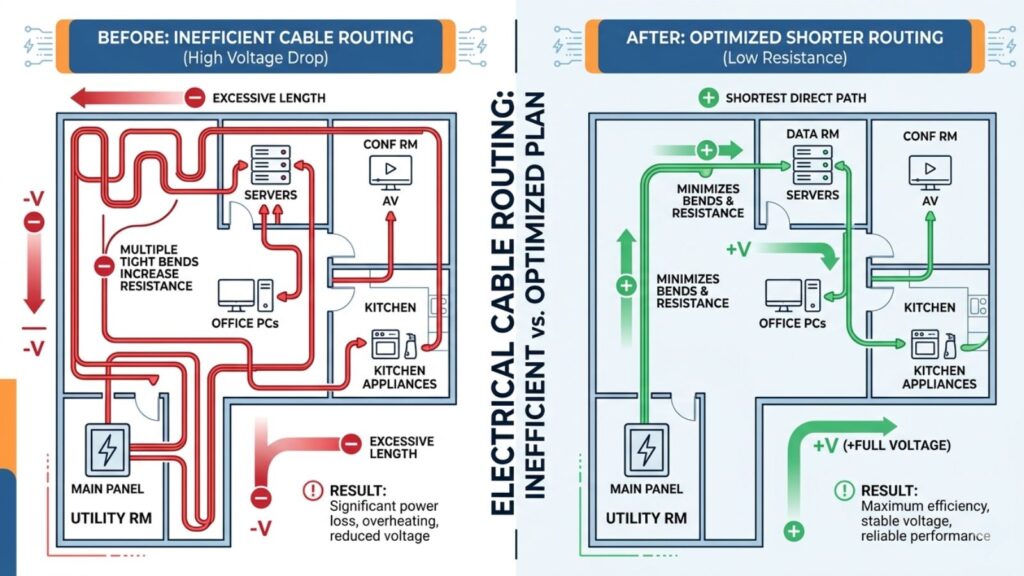
When the load is remote, another option is to move the distribution point closer to the load. Instead of running one long heavily loaded final circuit, you can place a local distribution board or control panel nearer to the equipment. This reduces the distance of the high-current section and improves voltage performance.
In the field, better routing is often cheaper than replacing a large amount of cable. It is not always possible, but when it is, it can be a very smart fix.
Reduce the load current on the circuit
Voltage drop rises with current. That means if you reduce current, you reduce voltage drop. This principle opens up more than one practical solution.
Sometimes a long circuit is carrying more load than originally intended. Over time, more equipment may have been added to the same branch. Splitting that load across multiple circuits can reduce current on the problem cable and improve voltage at the far end. In other cases, a heavy appliance may need its own dedicated circuit rather than sharing a long run with other loads.
For motors and mechanical equipment, it is also worth checking whether the machine is operating efficiently. A motor that is overloaded, poorly maintained, or mechanically strained may draw more current than expected. That extra current increases voltage drop further.
So, sometimes the fix is not only in the cable. Sometimes it is in the load.
Improve joints, terminations, and connectors
This is one of the most important field checks. Not all voltage drop happens evenly along the cable length. Bad connections can create localized resistance, and that resistance can cause a surprisingly large voltage loss.
Loose terminals, poorly crimped lugs, corroded connectors, overheated breaker terminals, and weak joints in junction boxes can all contribute to voltage drop. These problems also create heat, which means they are not just inefficient but also potentially dangerous.
I have seen installations where most of the measured voltage loss was not in the cable itself but across one poor connection. Once the termination was remade properly, the circuit performance improved immediately.
If you are troubleshooting voltage drop in long cable runs, always inspect and test the terminations. In many cases, that is one of the fastest and least expensive fixes available.
Distribute power at a higher voltage when distance is large
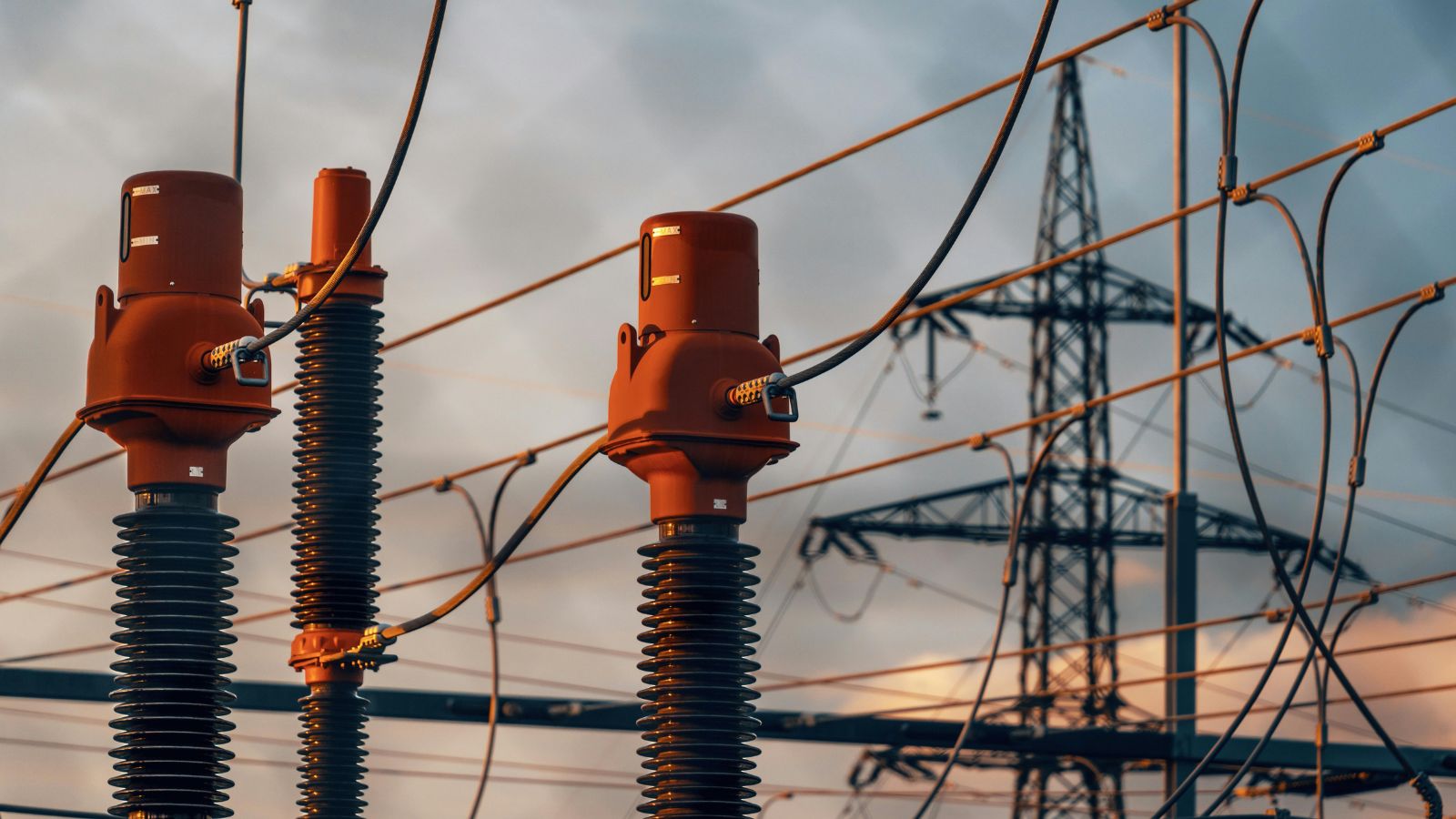
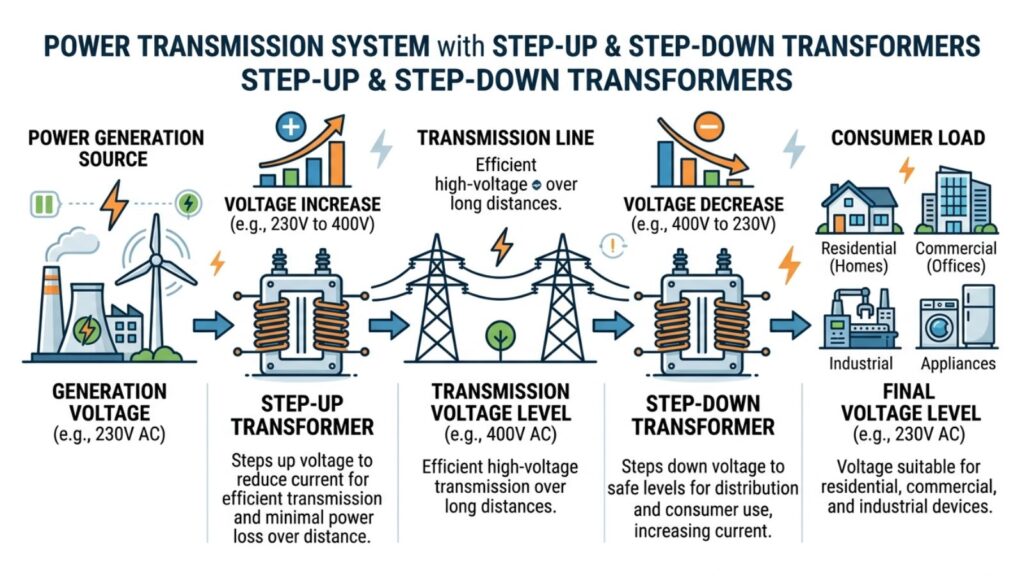
For longer distances and larger loads, one of the best engineering solutions is to distribute power at a higher voltage and step it down closer to the load. The reason is straightforward. For the same power, a higher voltage means lower current. Lower current means less voltage drop.
This is a common principle in power systems. Large amounts of power are not transmitted over long distances at very low voltage because the current would be too high and the losses would be unacceptable. The same logic applies at a smaller scale in industrial plants, farms, and large properties.
For example, if a remote building or pump station is far from the source, it may be better to feed it through a properly designed submain and then distribute locally. That is usually a better long-term solution than forcing a low-voltage final circuit to travel too far under heavy current.
This may not be necessary in every small installation, but for larger sites, it is often the correct engineering answer.
Choose the right conductor material
Copper and aluminum do not perform the same way. Copper has lower resistance than aluminum for the same cross-sectional area, which means it produces less voltage drop. In long cable runs where voltage performance matters, conductor material can make a difference.
That does not mean aluminum is wrong. Aluminum is widely used, especially in larger feeders, and it can be a very practical option. But if voltage drop is already critical and space is limited, using copper or increasing the aluminum conductor size may be necessary.
This decision should be based on engineering judgment, installation conditions, termination quality, and cost. Material choice is not just about price. It is about the performance of the full circuit.
Use parallel conductors for larger loads
In larger commercial or industrial installations, parallel conductors are another practical method of reducing voltage drop. When conductors are run in parallel correctly, the effective resistance of the path decreases. That reduces both voltage drop and heating.
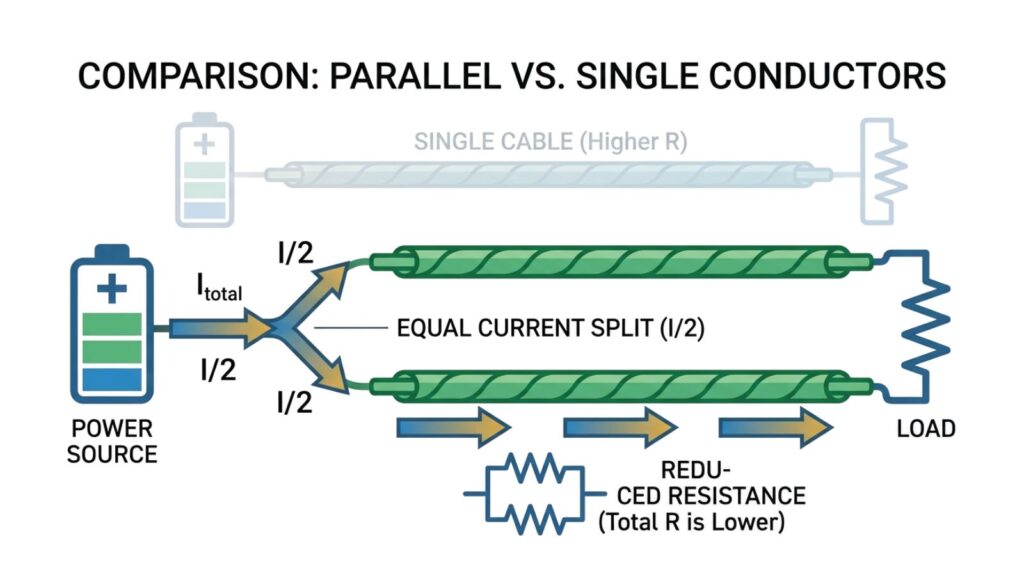
This method is more common in large feeders than in small residential circuits, but it is very effective where large loads must be supplied over long distances. The design must be done properly so that current shares evenly between the conductors. When installed correctly, parallel cables provide a strong technical solution.
Balance loads properly in three-phase systems
In three-phase systems, unbalanced loading can make voltage issues worse. If one phase carries much more load than the others, the voltage drop on that phase can become more severe. The system may still be operating, but not efficiently.
Balancing loads across phases helps distribute current more evenly and improve voltage conditions. In buildings and workshops where loads have been added gradually over time, this is worth reviewing. A simple redistribution of circuits can sometimes improve performance without changing the cable itself.
This is a good reminder that reducing voltage drop is not always about installing more copper. Sometimes it is about using the existing system more intelligently.
Do not ignore power factor in larger installations
In longer runs supplying inductive equipment, poor power factor can increase current for the same useful power. Higher current leads to more voltage drop. In these cases, power factor correction can help reduce current and improve overall system performance.
This is more relevant in commercial and industrial applications than in basic residential circuits, but it is still an important part of real-world troubleshooting. Where inductive loads dominate, reducing reactive current can improve voltage conditions and reduce losses.
A practical field example
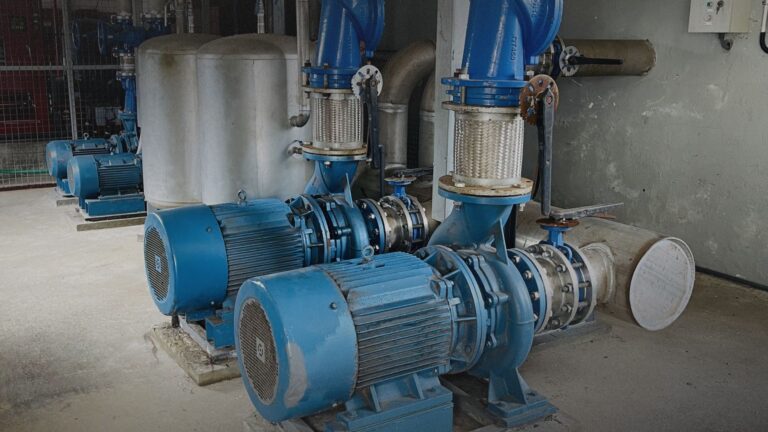
Imagine a remote borehole pump supplied from a main board through a long underground cable. The motor is rated correctly, but starting is sluggish and the voltage at the pump terminals falls well below the source voltage under load. The breaker is not the issue, and the supply voltage at the panel is acceptable.
In this case, there are several realistic solutions. The first is to increase the cable size. That is often the cleanest fix. The second is to inspect all joints, isolators, and terminations because one poor connection can make the situation much worse. The third is to review whether the route length can be reduced or whether local distribution can be installed closer to the pump. If the system is large enough, distributing at a higher voltage and stepping down locally may be the better long-term answer.
The correct fix depends on the site, budget, and installation constraints. But the troubleshooting logic remains the same.
Good design prevents future voltage drop problems
The cheapest time to solve voltage drop is before the cable is installed. Once the trench is closed, the walls are finished, or the equipment is in service, corrections become more expensive. That is why voltage drop should always be checked during design, especially for long runs, remote loads, and heavy equipment.
Circuits for pumps, HVAC units, EV chargers, detached buildings, outdoor services, and workshops should never be sized by habit alone. They should be checked for current-carrying capacity, voltage drop, installation method, and protection coordination.
A design that ignores voltage drop may still pass current, but it will not always deliver performance.
Final thoughts
If you want to know how to reduce voltage drop in long cable runs, the answer is not one single trick. It is a set of practical engineering methods. Increase conductor size where resistance is too high. Reduce the route length where possible. Improve poor terminations and joints. Lower the circuit current by redistributing loads or improving system efficiency. Use higher voltage distribution for longer distances and larger loads. Balance three-phase systems properly. Select conductor material wisely.
These are the solutions that work in the field because they deal with the real causes of voltage drop, not just the symptoms. In my experience, the best results come when troubleshooting is backed by measurement and when design decisions are based on both theory and site reality.
Voltage drop should never be treated as an afterthought. It affects equipment performance, system efficiency, and long-term reliability. When it is handled properly, the installation runs better, wastes less energy, and gives fewer problems over time. That is the kind of practical engineering that matters in the field.
FAQ: How to Reduce Voltage Drop in Long Cable Runs
What is the main cause of voltage drop in long cable runs?
The main cause is conductor resistance. As cable length increases, total resistance increases, and more voltage is lost when current flows.
What is the easiest way to reduce voltage drop in a cable?
The most common fix is to use a larger cable size because a larger conductor has lower resistance.
Can bad connections cause voltage drop?
Yes. Loose or corroded terminations can add resistance and create significant localized voltage loss.
Does higher current increase voltage drop?
Yes. Voltage drop increases as current increases, which is why heavily loaded long circuits need careful design.
Why do motors suffer from voltage drop?
Motors need proper voltage to develop starting torque and run efficiently. Low voltage can cause weak starting, overheating, and poor performance.