
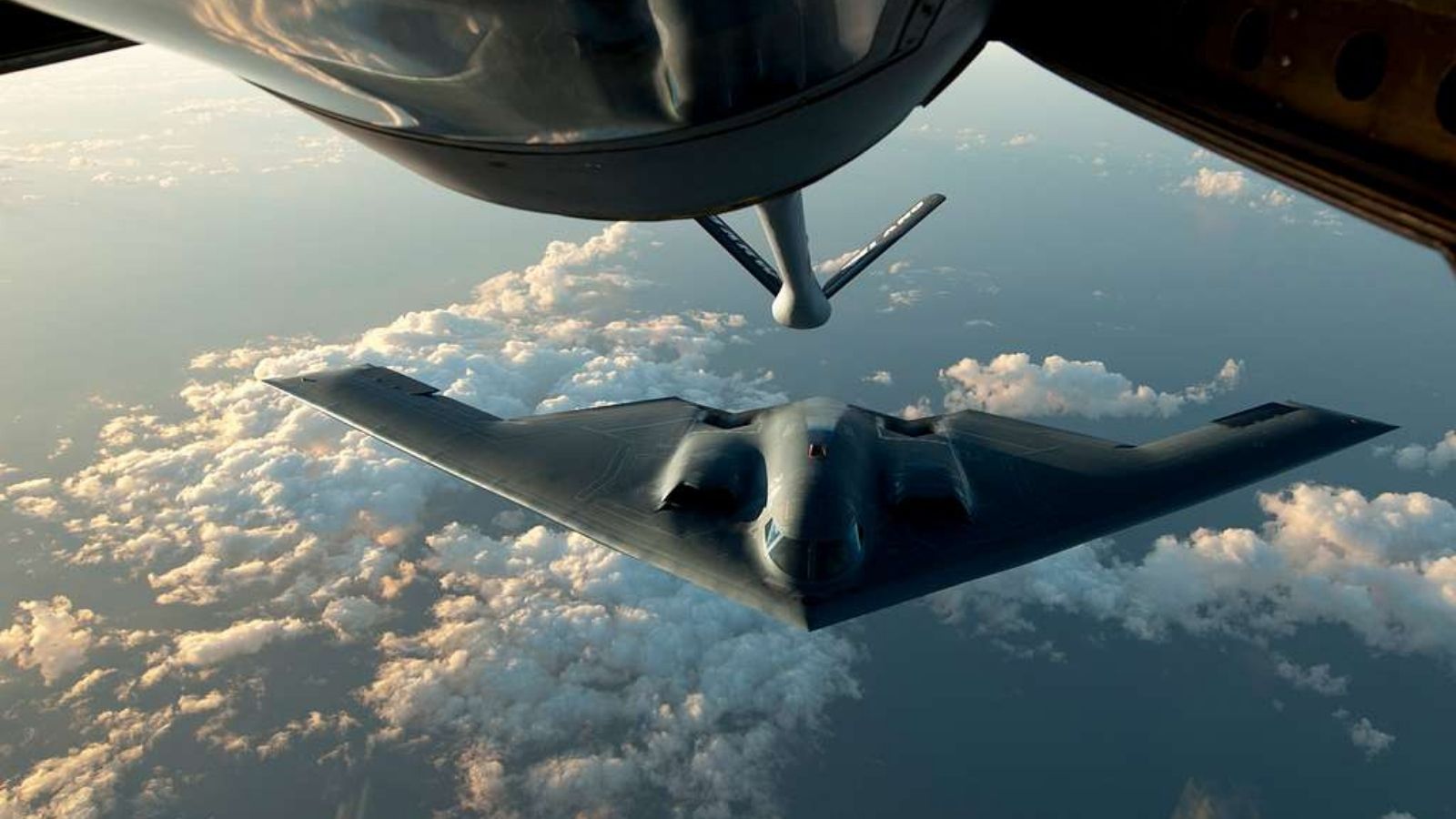

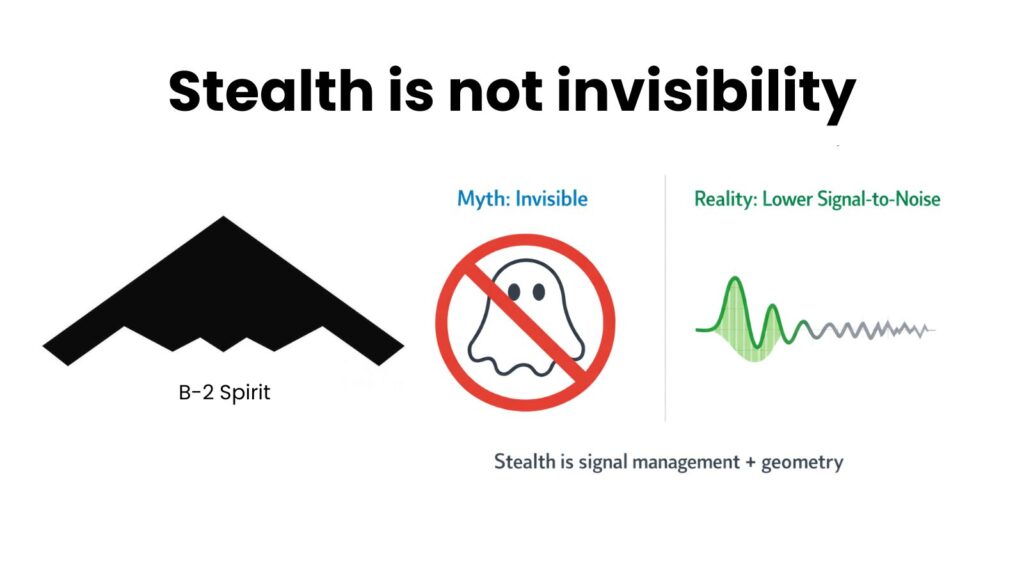
If you have ever heard someone say the B-2 Spirit is “invisible,” you have heard the most common stealth myth. It sounds cool. It also quietly breaks people’s understanding of physics. Nothing large is literally invisible. Not to radar, not to heat sensors, not to human eyes. What stealth really does is far more interesting than the myth. Stealth is about managing what the sensor receives. It is about geometry. It is about lowering the signal-to-noise so detection becomes harder, less reliable, and less consistent.
 So in this article, I’m going to explain the engineering behind this mighty stealth machine. I will keep it high-level and educational. I will not cover “how to detect” stealth aircraft. I will not discuss counter-tactics. I will not describe operational methods. We will focus on engineering concepts that normal people can understand: what radar is “hearing,” what radar cross section means, why shape matters, why edges matter, why coatings matter, and why frequency matters in a conceptual way.
As a starting reference, it helps to know that official fact sheets describe the B-2 Spirit as a low-observable aircraft whose stealth comes from a mix of reduced signatures and design choices like its flying-wing shape, composite materials, and special coatings.
The misconception: stealth is not invisibility
“Invisible” makes people imagine a switch. Like the aircraft is either seen or not seen. Real detection is not a switch. It is more like hearing a whisper in a noisy room.
If the room is quiet, you hear it.
If the room is loud, you miss it.
If the whisper is closer, you hear it again.
If it is farther away, you lose it.
Radar works similarly. The radar sends out energy and listens for a return. If the return is strong compared to the background noise and clutter, the radar can detect and track the object. If the return is weak, detection becomes uncertain. That is the first big idea.
Stealth is not about zero signal. It is about reducing the return signal and shaping how it behaves, so detection is harder, and tracking is less stable.
This is why engineers prefer the phrase “low observable.” You will even see public B-2 Spirit descriptions use that wording.
Think of radar like a flashlight you cannot see
Here is a simple mental model. Radar is like a flashlight in the dark, except the “light” is radio energy. The radar shines energy out. The energy spreads as it travels. When it hits an object, some of it reflects. If enough energy comes back, the radar notices it.
Two things matter immediately:
- The energy gets weaker with distance. It spreads out.
- The object does not reflect the same way in every direction.
That second point is where geometry enters the story.
- A flat plate facing the radar acts like a mirror. It reflects a lot.
- A curved or angled surface tends to reflect energy away.
- Edges and corners can create strong reflections, too.
So stealth design is basically asking: “How do we avoid sending a strong reflection back to the radar?”
Signal-to-noise ratio: the hidden keyword behind stealth
The most useful phrase for normal people is “signal-to-noise ratio,” often shortened to SNR.
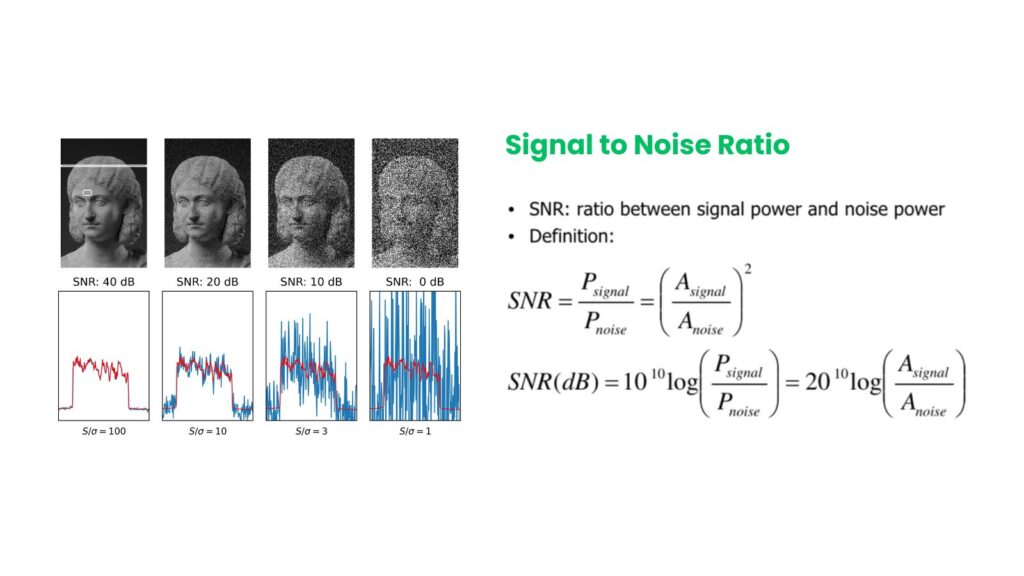
Signal is the return from the object.
Noise is everything else. Electronics noise. Background clutter. Reflections from terrain or weather. Random interference.
If the signal is much stronger than the noise, detection is easy. If the signal is close to the noise, detection becomes unreliable. Stealth tries to push the return signal down. Not to zero. Just down. This also explains why stealth is not a magic cloak. Even if the return is small, a sensor might still detect it under the right conditions. Or at a closer distance. Or with a different angle. Detection is not a single moment. It is a probability over time.
Radar Cross Section: What it actually means
Radar Cross Section (RCS) is one of the most misunderstood measurements in the stealth discussion.
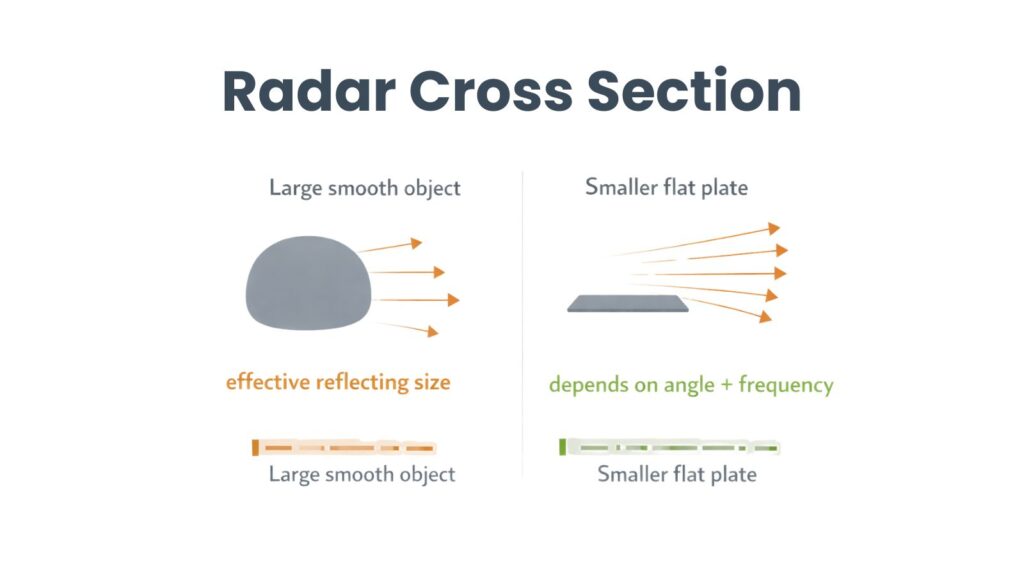
RCS is not the physical size of the aircraft.
It is also not a single constant number.
RCS is best explained like this:
RCS is the “effective reflecting size” an object appears to have to a radar, under a specific set of conditions.
Those conditions matter. RCS depends on the direction the radar is looking from. It depends on the frequency. It depends on polarization. It depends on details like edges, gaps, and surface materials. So when someone says, “This aircraft has the RCS of a bird,” treat it as a simplified statement at best. It may be referring to a specific aspect and a specific frequency. But it is not the whole story. The important takeaway is simple. A smaller RCS usually means less reflected energy back to the radar, which tends to reduce detection range and tracking reliability, all else equal.
Geometry: why the B-2’s shape matters so much
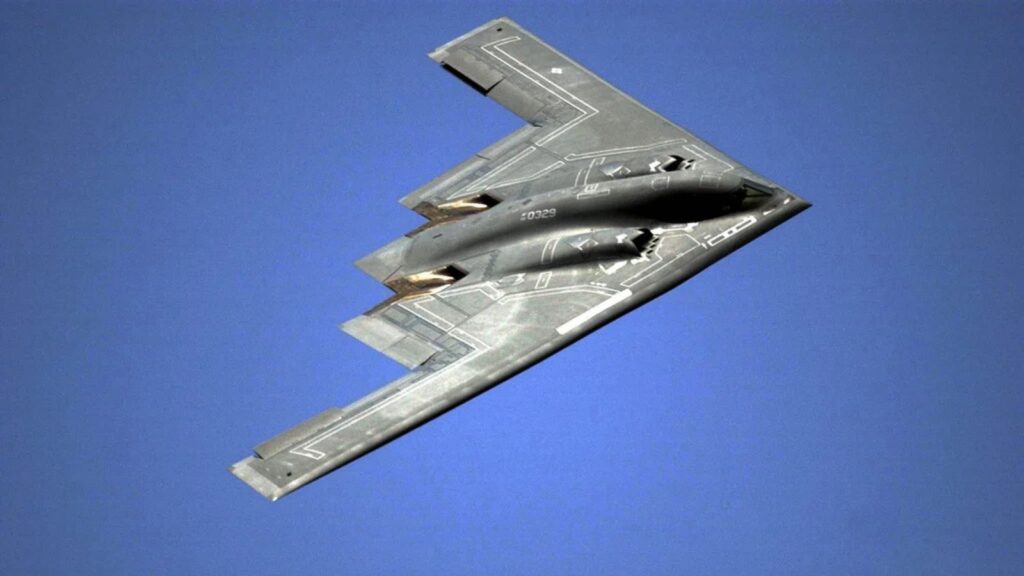
If you look at a B-2 Spirit, one thing stands out immediately. It looks like a smooth flying wing. That is not just a style choice. It is a stealth choice.
Public descriptions of the B-2 Spirit highlight that it combines a flying-wing design with composite materials and special coatings as part of its low-observable approach.
Here is why the flying-wing idea is helpful in simple terms.
First, fewer vertical surfaces often mean fewer strong reflections from certain angles. Vertical tails are big reflectors. A flying wing avoids that entire feature.
Second, smooth blending reduces sudden shape changes. Sudden shape changes and sharp corners can create strong reflection behavior.
Third, the aircraft can be designed so that many edges line up in a small set of directions. Engineers call this edge alignment. You do not need to memorize the term. You just need the idea.
When edges are aligned, the strongest reflections tend to go in fewer directions. That can reduce how often energy reflects toward the sensor.
This is one reason stealth aircraft often look “clean.” The look is a result of reflection control, not decoration.
Edge alignment and seams: why “small details” are not small
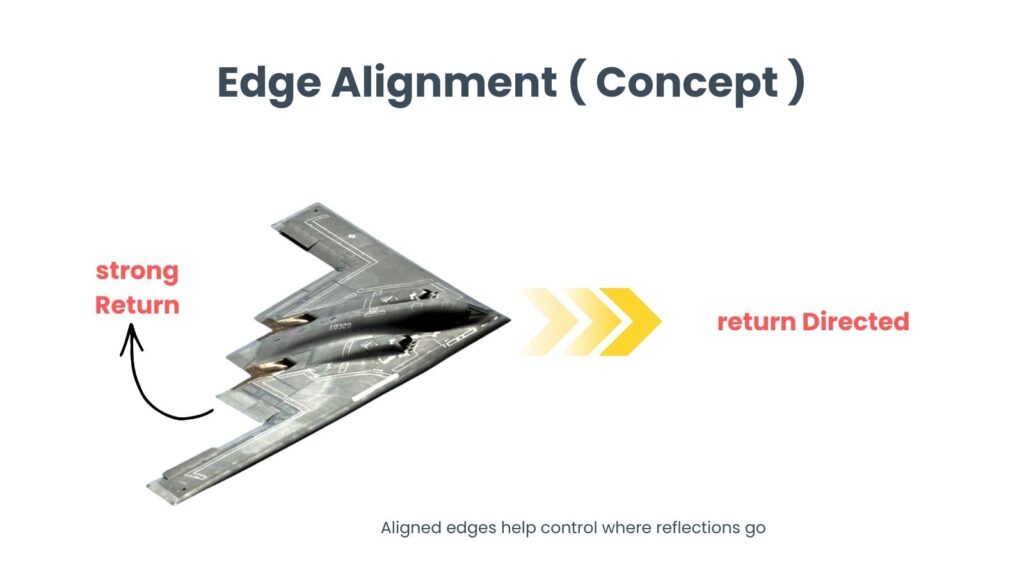
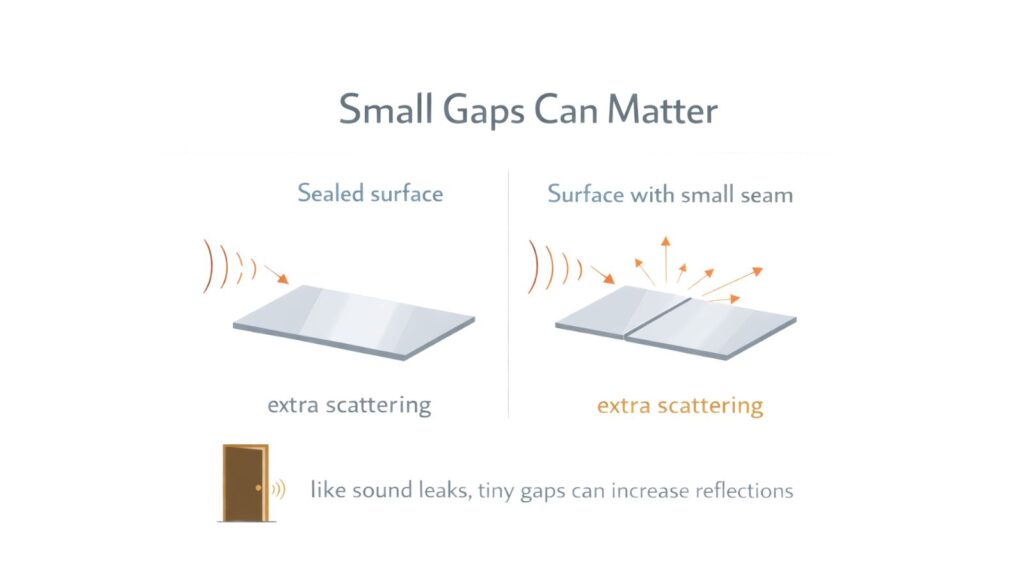
People often focus on the big shape and forget the small details. In stealth design, the small details can dominate.
A panel gap is a tiny slot. But to radio waves, it can act like a little antenna or a scattering feature.
A sharp corner can behave like a bright reflector.
A cavity can trap energy and then re-radiate it.
This is why stealth is not only about the external silhouette. It is also about manufacturing precision and maintenance discipline. If you want a non-military analogy, think about soundproofing a room. One open gap under the door can ruin the whole effort. Stealth has similar sensitivity. A few “leaky” features can raise the effective signature.
This is also why stealth is not a permanent on-off feature. It is something that must be maintained.
Materials as “lossy layers”: not magic paint, but physics
Now let’s talk about coatings and materials in simple language.
Some materials can absorb part of the incoming radar energy, converting it into heat. Not much heat. Often tiny amounts. But the key is that absorbed energy is energy that does not return to the radar. This is why you will see official fact sheets mention special coatings and composite materials as contributors to low observability.
It helps to think of it like sunglasses.
Sunglasses do not make your face invisible.
They reduce reflection and intensity.
They change what the observer receives.
Radar-absorbing materials play a similar role. They are not a single “stealth paint.” They are part of a full design approach that includes shape, edges, and surface treatment. Also, materials are not perfect. They work better at some frequencies than others. They work better at some angles than others. That takes us to the next key idea.
Why frequency matters (conceptually)
You do not need advanced electromagnetics to understand this.
Frequency is tied to wavelength.
Wavelength is the “size” of the wave.
Waves interact differently with objects depending on relative size. If you have ever seen ocean waves pass around small rocks but crash into large breakwaters, you have already seen the concept. With radar, the interaction between the wave and object changes as the wavelength changes. That influences how energy scatters and how RCS behaves. It also means you cannot describe stealth with one number and one sentence.
This is the safe and honest way to say it:
Stealth performance depends on conditions. Frequency is one of those conditions.
We will stop there. We will not turn this into a “what sensor to use” discussion. The goal is understanding, not tactics.
Stealth is not just radar
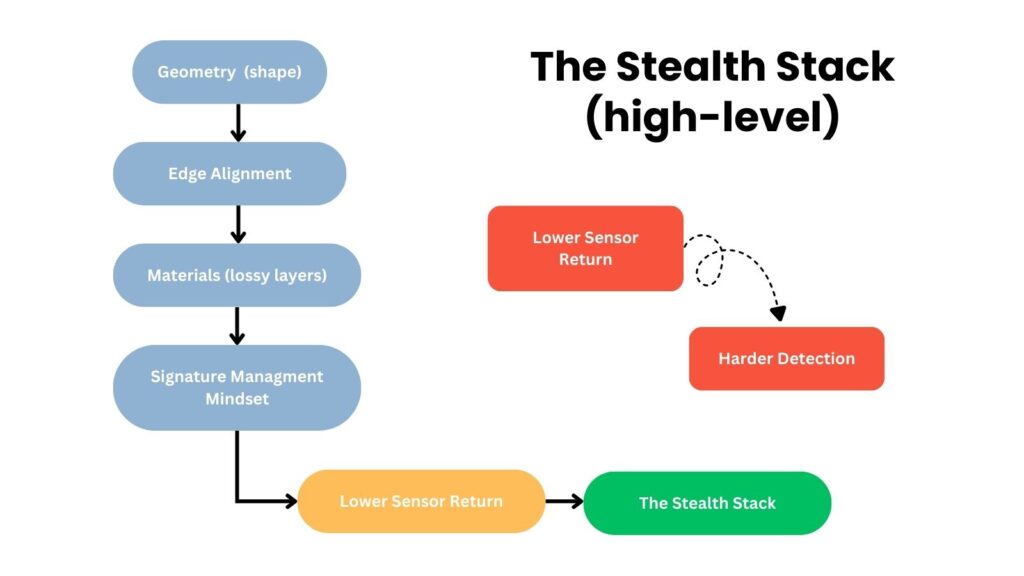
Radar is the headline, but it is not the only way an aircraft can be observed. Official descriptions of the B-2 Spirit note that low observability involves reducing several types of signatures, including radar and others like infrared, acoustic, electromagnetic, and visual characteristics.
Stealth aircraft are designed to be harder to detect across multiple sensing methods. But nothing is “zero.” The goal is to reduce the chances of reliable detection and tracking.
A simple way to think about radar SNR
Let’s build a very gentle SNR picture that stays educational.
Imagine a radar receiver has a background noise level. The exact value depends on the electronics and the environment. You do not need the details.
Now imagine the target return is above that noise. If it is far above, detection is easy. If it is just barely above, detection becomes uncertain and sensitive to small changes. This is why engineers like decibels. dB makes large ratios easy to compare.
Here is the key intuition:
A small reduction in return signal in dB can have a big effect on detectability, especially near the threshold.
You can explain this on your site with a toy example:
If the signal is 10 dB above the noise, it is “comfortable.”
If Signal is 3 dB above the noise, it is “barely there.”
If the signal drops below the noise, it is likely missed.
This is not a statement about any real radar. It is just a universal engineering idea. Threshold systems behave this way in audio, communications, and sensors.
What stealth does not mean
Stealth does not mean an aircraft is never seen.
Stealth does not mean every radar is useless.
Stealth does not mean detection is impossible.
Stealth means that detection and tracking become harder. Often much harder. It shrinks margins. It reduces confidence. It forces the sensor system to work closer to its limits. That is exactly how engineers talk about it. Not as magic. As margin management.
Why the B-2 Spirit is such a powerful teaching example
Even without going into classified details, the B-2 Spirit is a useful example because it makes the stealth design philosophy obvious. Its flying-wing shape shows how geometry can be used to control reflections. Public fact sheets also explicitly connect its low observability to that shape, plus special coatings and materials. So the B-2 becomes a “visual lesson” in engineering.
FAQ
Is the B-2 Spirit actually invisible to radar?
No, not in the literal sense. Public descriptions often use strong language like “virtually invisible” in a general way, but the engineering meaning is “low observable,” which means reduced signatures and reduced detectability, not zero detectability.
What is radar cross-section in one sentence?
Radar cross-section is a measurement of how strongly an object reflects radar energy to a radar, under specific conditions. It is not the same as physical size.
Why does shape matter so much?
Because radar reflections are directional. Shape and edge design influence whether energy reflects toward the sensor or away from it.
Why do people mention frequency?
Because wavelength changes how radar waves interact with an object. That affects scattering behavior and the effective radar cross section. This is a general physics concept.
Final thoughts
The “invisible bomber” story is catchy, but it hides the real achievement. The real achievement is that engineers took a messy problem, waves interacting with shapes in a noisy world, and controlled it using geometry, materials, and careful design. That is what B-2 Spirit stealth really is. Signal management. Reflection management. Margin management.